
How to Start a Small Herb Garden Indoors
Starting a small herb garden indoors is an easy way to add fresh flavor to everyday meals. You do not need a large home, a greenhouse, or expensive equipment. With a sunny spot, a few containers, and the right plants, you can grow useful herbs on a windowsill, kitchen counter, or small shelf.
Indoor herbs can also make a space feel brighter and more inviting. The key is to begin with a manageable setup and choose herbs that match the light and temperature in your home.
Choose the Right Location
Most herbs need several hours of bright light each day. A south-facing window is often a good choice because it usually receives the most direct sunlight. East- and west-facing windows can also work well, while north-facing windows may provide too little light for some herbs.
Choose a location that is:
- Bright and close to a window
- Protected from cold drafts and heating vents
- Easy to reach for watering and harvesting
- Large enough to hold containers without crowding
Keep herbs away from sudden temperature changes. Most indoor herbs grow well in ordinary household temperatures, but they may struggle beside a drafty window, radiator, or air-conditioning vent.
Select Beginner-Friendly Herbs
Some herbs are easier to grow indoors than others. Start with two or three varieties instead of planting too many at once. This gives you time to learn how each plant responds to light, water, and trimming.
Good Herbs for Indoor Growing
- Basil: A fast-growing herb that enjoys warmth and bright light. Harvest the leaves regularly to encourage fuller growth.
- Chives: Compact and easy to maintain. They can grow on a sunny windowsill and add a mild onion flavor to many dishes.
- Mint: Vigorous and forgiving, but it is best grown in its own container because it spreads quickly.
- Parsley: A useful herb that tolerates indoor conditions well when given enough light.
- Thyme: A compact herb with small leaves and a pleasant fragrance. It prefers bright light and soil that dries slightly between waterings.
- Oregano: A hardy choice that likes plenty of light and moderate watering.
Cilantro can also be grown indoors, although it tends to grow quickly and may produce leaves for only a limited time before flowering. For a first garden, basil, chives, mint, parsley, or thyme may be simpler choices.
Decide Between Seeds and Starter Plants
You can begin with seeds or small plants from a garden center. Seeds are usually less expensive and offer more variety, but they take longer to develop. Starter plants provide a quicker harvest and are helpful if you want immediate results.
Seeds are a good choice when you enjoy watching plants develop from the beginning. Starter plants may be more practical for slow-growing herbs or for gardeners who are new to indoor growing. If you buy plants, check that they have healthy green leaves and no visible pests.
Pick Suitable Containers
Every herb needs a container with drainage holes. Excess water must be able to escape because constantly wet soil can damage the roots. Place a saucer or tray under each container to protect your windowsill or counter.
Small pots are usually enough for young herbs, but the plants may need larger containers as they grow. A pot that is about 6 inches wide is a useful starting size for many individual herbs. Mint and other spreading plants may need more room.
You can use clay, ceramic, plastic, or metal containers, as long as they drain properly. Decorative containers without drainage holes can still be used as outer covers, but place the herb in a separate draining pot inside.
Use the Right Potting Mix
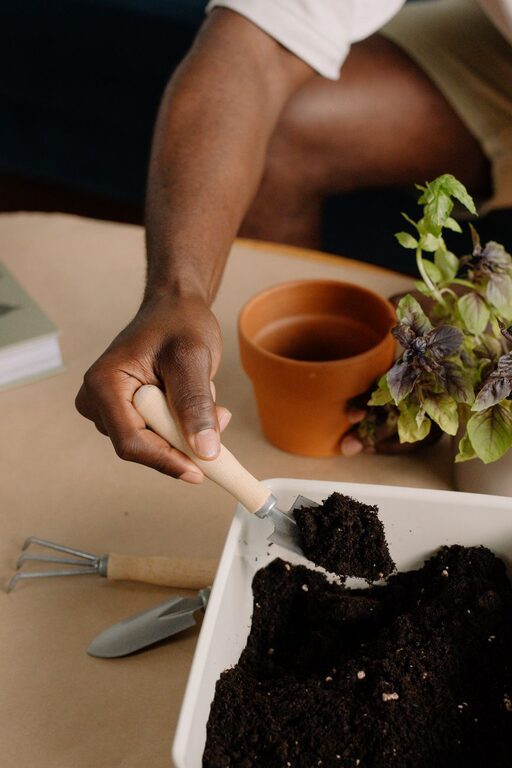
Choose a lightweight indoor potting mix rather than soil taken from the yard. Outdoor soil can become compacted in containers and may contain insects or plant diseases. A potting mix designed for herbs, vegetables, or houseplants is usually suitable.
Fill the container without pressing the mix down too firmly. Loose soil allows air and water to move around the roots. Leave a small amount of space below the rim so water does not spill over when you water the plant.
Plant Your Herbs
If you are planting seeds, follow the depth and spacing instructions on the seed packet. Some seeds need light to germinate and should only be lightly covered. Keep the soil gently moist while the seeds sprout, but avoid soaking it.
When transplanting a starter plant, remove it carefully from its original container and loosen any tightly packed roots. Place it at about the same depth it was growing before. Add potting mix around the roots and water lightly.
Label each container with the herb name and planting date. Labels are especially helpful if you are growing several herbs that look similar when young.
Provide Enough Light
Light is one of the most important parts of indoor herb gardening. Without enough light, plants may become tall, thin, pale, or weak. Turn the containers every few days so all sides receive light evenly.
If your home does not receive enough natural sunlight, consider using a small grow light. Place it according to the manufacturer’s instructions and provide a regular schedule of light and darkness. A timer can make this routine easier.
Signs that an herb needs more light include:
- Long, stretched stems
- Small or pale leaves
- Slow growth
- The plant leaning strongly toward a window
Water Carefully
Indoor herbs often need less water than plants growing outdoors. Check the soil with your finger before watering. If the top inch feels dry, add water slowly until a small amount drains from the bottom of the container.
Empty the saucer after watering if it collects excess water. Do not let the pot sit in standing water for long periods. Overwatering is one of the most common problems in indoor herb gardens.
Different herbs have different preferences. Basil generally likes evenly moist soil, while thyme and oregano prefer the soil to dry somewhat between waterings. Observe your plants and adjust your routine as needed.
Harvest and Prune Regularly
Harvest herbs once the plants are established and producing several sets of healthy leaves. Use clean scissors or pinch leaves off with your fingers. Avoid removing more than one-third of the plant at a time so it can continue growing.
For basil, cut just above a pair of leaves. This encourages the plant to branch and produce a fuller shape. Chives can be trimmed close to the base when you need them. Mint, parsley, thyme, and oregano also benefit from regular trimming.
Harvesting in the morning, after any surface moisture has dried, can help preserve the herbs’ fresh texture and flavor. Use them immediately, or store them briefly in the refrigerator according to the herb’s needs.
Watch for Common Problems
Indoor herbs are generally easy to care for, but a few problems can appear. Yellow leaves may result from too much water, poor drainage, or insufficient light. Dry, brown leaf edges can indicate underwatering, very dry air, or strong heat from a nearby vent.
If you notice small insects, move the affected plant away from other herbs and inspect the leaves and stems. Wipe the plant gently with a damp cloth and continue checking it regularly. Keeping plants spaced apart improves air circulation and makes problems easier to spot.
Keep Your Garden Simple
A small indoor herb garden does not need to be complicated. Begin with a few reliable herbs, give them bright light, and develop a regular routine for checking soil moisture. As you gain experience, you can add more varieties, try different containers, or grow herbs from seed.
With a little attention, your indoor garden can provide fresh leaves for cooking throughout much of the year. The most important step is simply to start with a setup that fits your space and daily routine.
