
How to Create a Coffee Station at Home
A coffee station can make your morning routine easier while adding a warm, welcoming touch to your kitchen or home. Whether you enjoy drip coffee, espresso, tea, or a simple cup made with a French press, a dedicated station keeps your supplies organized and close at hand.
You do not need a large kitchen or an expensive setup. With the right location, a few useful tools, and some thoughtful storage, you can create a coffee station that fits your space, budget, and habits.
Choose the Right Location
Start by selecting a convenient place for your coffee station. The best location is usually near a power outlet and away from areas that become crowded during meal preparation.
Good options include:
– A section of the kitchen counter
– A rolling cart
– A small sideboard or console table
– An open shelf near the dining area
– A corner of a home office or breakfast nook
If you use a coffee maker that needs water frequently, place the station near the sink. If you use a machine with a water reservoir, make sure you have enough room to remove and refill it easily.
Consider how much space you need for preparing, serving, and cleaning up. A narrow area can work well, but avoid placing your coffee maker so close to the wall that the lid or water reservoir cannot open fully.
Decide What You Actually Need
A coffee station does not have to include every coffee accessory available. Start with the items you use regularly, then add extras only if they serve a purpose.
Essential Equipment
Your basic setup may include:
– A coffee maker, French press, pour-over brewer, or espresso machine
– A coffee grinder, if you use whole beans
– A kettle for hot water
– Measuring spoons or a coffee scoop
– Mugs or cups
– A container for coffee beans or grounds
– A small waste bowl for used grounds or filters
Choose one main brewing method for the station at first. This keeps the area simple and prevents unused equipment from taking up valuable space.
Optional Extras
Depending on your preferences, you might also add:
– A milk frother
– A travel mug
– A selection of teas
– Syrups or sweeteners
– A small tray for serving
– Reusable coffee filters
– A timer or kitchen scale
Think about your daily routine. If you usually make coffee quickly before work, prioritize easy access and simple cleanup. If you enjoy trying different brewing methods on weekends, leave room for additional tools.
Create a Practical Layout
Arrange your coffee station in the order you use each item. For example, place coffee beans or grounds near the grinder, the grinder near the brewer, and mugs beside the finished coffee.
A tray can help define the area and keep small items together. It also makes cleaning easier because you can lift several items at once. Choose a tray that is large enough for your coffee maker and accessories without making the counter feel crowded.
Keep frequently used items within easy reach. Store less-used supplies in a nearby cabinet, drawer, or basket. This approach keeps the station attractive without sacrificing convenience.
A simple layout might look like this:
- Coffee maker at the back
- Coffee container and grinder on one side
- Mugs and spoons on the other side
- Sweeteners, tea, or napkins in a small container
- Tray or mat underneath to catch spills
Leave enough space around the coffee maker for ventilation and safe use. Follow the manufacturer’s instructions when deciding where to place electrical appliances.
Add Storage That Fits Your Space
Storage is one of the most important parts of a well-designed coffee station. Even a small collection of supplies can quickly look messy without a system.
Use containers or baskets to group similar items. For example, place tea bags in one container, sweeteners in another, and extra filters in a covered basket. Clear containers make it easy to see when supplies are running low, while opaque containers can create a cleaner, more uniform appearance.
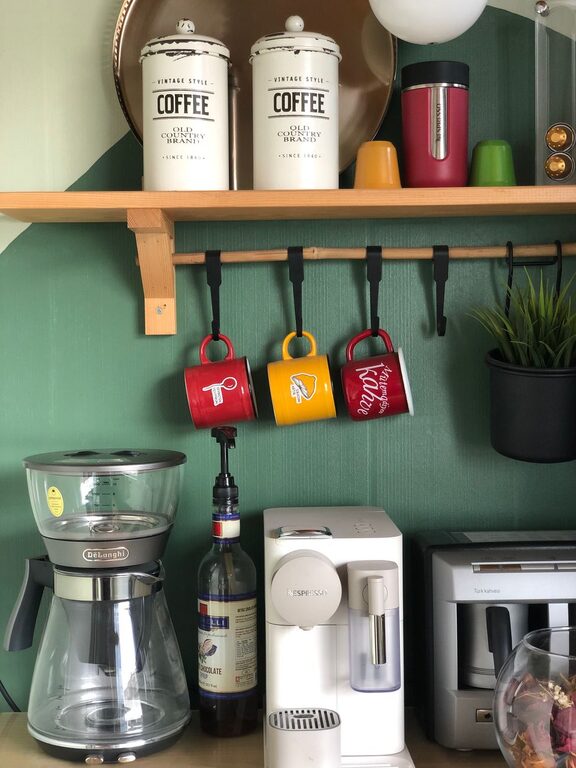
If you have limited counter space, consider vertical storage. A small shelf above the station can hold mugs, coffee containers, and decorative items. Wall-mounted hooks are useful for hanging mugs, measuring spoons, or reusable filters.
Drawers can also work well. Use dividers to organize pods, tea bags, stirrers, and other small supplies. If you use a cart, dedicate each level to a different purpose:
– Top level: coffee maker and daily essentials
– Middle level: mugs, beans, grounds, and filters
– Bottom level: extra supplies and cleaning items
Select Mugs and Serving Items
Mugs are both practical and decorative. Choose a few that fit your everyday routine rather than storing more than you can use.
You might select mugs based on:
– Size
– Material
– Handle shape
– Color
– Stackability
– Microwave and dishwasher safety
Open shelving allows attractive mugs to become part of the decor. If you prefer a cleaner look, store them inside a cabinet and display only one or two favorites.
Add a small spoon rest, napkin holder, or serving tray to make the station feel complete. These details can improve the experience without taking up much space.
Keep Coffee Fresh
Proper storage helps preserve the flavor of coffee. Store beans or grounds in an airtight, opaque container away from heat, moisture, and direct sunlight. Avoid placing the container directly beside a stove, oven, or sunny window.
Buy an amount you can use within a reasonable period rather than storing a large supply for months. If you enjoy whole-bean coffee, grinding only what you need can help maintain freshness.
Label containers if you keep different types of coffee, tea, or sweeteners at the station. Simple labels are especially helpful when several people in the household use the same space.
Add Personal Style
Your coffee station should feel like part of your home. Use colors, materials, and accessories that work with the surrounding room.
For a simple, modern look, choose matching containers, a neutral tray, and a limited color palette. For a cozy style, add a wooden board, woven basket, or small framed print. A plant or small vase can add color, as long as it does not interfere with the equipment.
Avoid adding too many decorations. A coffee station works best when it remains easy to use and clean. Choose a few meaningful or useful items instead of filling every available surface.
Plan for Easy Cleaning
Coffee grounds, drips, and spilled milk can quickly make a station look untidy. Build cleaning into your routine from the beginning.
Keep a cloth or small towel nearby for wiping the counter and equipment. Empty grounds and used filters regularly, and rinse removable parts according to the manufacturer’s instructions. Wash mugs and serving tools promptly so the area stays ready for the next use.
Once a week, clear the entire station and wipe the surface underneath. Check expiration dates on creamers, syrups, and other additions. This is also a good time to refill containers and remove items you no longer use.
Final Tips for a Successful Coffee Station
Before finishing your setup, consider these simple tips:
– Measure the available space before buying storage items.
– Keep electrical cords neat and away from water.
– Place heavy appliances on a stable, level surface.
– Store coffee away from heat and sunlight.
– Group items according to how often you use them.
– Leave enough space for cleaning and refilling.
– Choose accessories that are useful as well as attractive.
– Adjust the setup after using it for a few days.
The best coffee station is one that supports your routine. Start with the essentials, keep everything easy to reach, and make small changes as you learn what works. With a little planning, even a compact corner can become an organized and enjoyable part of your home.
